- Las Vegas, Nevada
- New Jersey
- New York
- Las Vegas, Nevada
- New Jersey
- New York

Hormone Replacement Therapy

What is Hormone Replacement Therapy?
Hormone replacement therapy (HRT) is a medically supervised treatment used to support healthy hormone levels when the body’s natural production declines. Hormones are chemical messengers that play an important role in regulating energy, mood, sleep, metabolism, growth, and reproductive function. As people age, hormone levels can change, which may contribute to symptoms such as fatigue, weight changes, decreased libido, or sleep disturbances. HRT is used to address hormone-related imbalances by supplementing hormones such as estrogen, testosterone, or thyroid hormone when clinically appropriate. The goal of hormone therapy is not simply to treat lab numbers, but to support overall health and quality of life through individualized care and ongoing medical oversight.
Table of Contents
The Importance of Sex Hormones for Health and Longevity
Male and female sex hormones play an important role in overall health and long-term well-being. Estrogen, testosterone, and progesterone contribute to functions related to brain health, bone density, muscle mass and strength, cardiovascular health, and sexual function. Both men and women commonly experience declines in sex hormone levels in their 40s and 50s. As hormone levels change, some individuals may notice differences in how they feel, perform, and recover over time. For certain patients, hormone optimization may be considered as part of a longevity care plan.
Hormone Lab Testing
It all starts with testing each person’s individual blood work to evaluate hormone levels and identify potential imbalances. Most hormone testing only scratches the surface, checking a few basic numbers, which often results in reactionary treatment.
My approach is different—I run a thorough and wide-ranging hormone panel that looks at the entire hormonal system. This includes not just sex hormones, but also thyroid function, adrenal balance, pituitary signals, and many other often-overlooked markers that play an important role in how you feel and function. By evaluating the full network of hormonal communication in the body, I’m able to gain deeper insight and design a plan that’s truly tailored to your needs—not just based on one or two lab values.
Aren’t there negative side effects to hormone therapy?
There has been some controversy surrounding hormone therapy due to concerns about potential side effects or associated health risks. While it’s true that hormone therapy can have adverse effects, there are established ways to reduce risk and improve safety when treatment is appropriately prescribed and monitored.
- Utilizing hormone levels at appropriate dosages
- Using bioidentical hormones rather than synthetic formulations, when clinically indicated
- Administering medication through the appropriate route (oral, topical, injection, pellet), based on individual needs
When these guidelines are followed and therapy is medically supervised, hormone therapy is generally considered safe for appropriately selected patients.

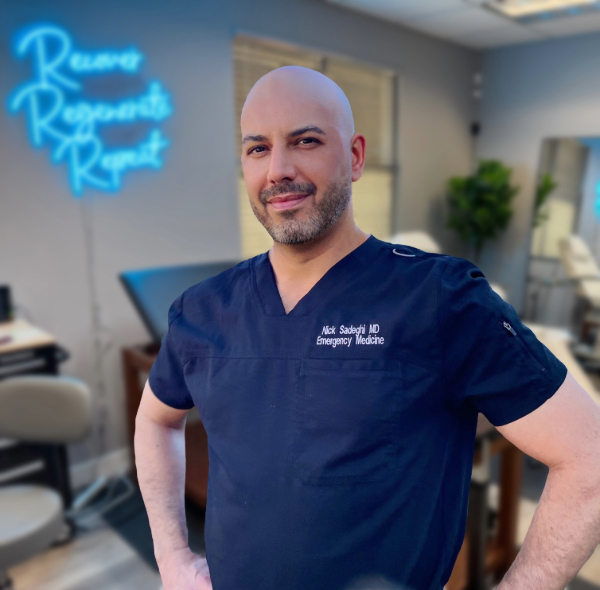
Meet Dr. Nick Sadeghi
“The mission of my regenerative clinic is to help you feel better, look better, and support longevity and vitality—so you can remain as active, healthy, and engaged as possible for as long as possible.”
If you’re over 35 and feeling tired, gaining weight, losing motivation, struggling in the gym, or noticing changes in your libido—you’re not crazy. You’re not weak. And you’re definitely not alone.
I felt it too.
Using advanced regenerative and longevity-focused medicine, my practice is designed to support recovery, performance, and healthy aging. Our core treatments focus on optimizing natural biological processes with therapies such as Hormone Replacement Therapy, NAD, Regenerative Biologic treatments, Platelet-Rich Plasma, Peptides, Tenex, EBOO, and other modern techniques.
Dr. Nick Sadeghi
What are the different ways to administer hormone treatment?
There are several methods for administering hormone therapy to patients, including oral tablets, topical creams, injections, and hormone pellets. Each method has its advantages and disadvantages, so it’s essential to evaluate each patient thoroughly to determine the most appropriate option for them. For example, some oral hormone treatments have been associated with an increased risk of blood clots in some patients, so it is often avoided when alternative delivery methods are available.
Injectable treatments are effective but can be inconvenient, as they typically need to be administered once or twice a week, which may lead to hormone level fluctuations. Topical creams are convenient and effective, but proper dosing can be challenging, as they rely on consistent absorption through the skin.
What are hormone pellets?
In my practice, I use various forms of hormone treatment, including topical and injectable methods. One of the more convenient options is hormone pellet insertion. These pellets use bioidentical hormones, which are designed to closely match hormones naturally produced by the body, rather than synthetic formulations. This is why I often incorporate hormone pellet therapy into individualized treatment plans when appropriate.
Hormone pellets are small tablets of hormone medication that are implanted into the fatty layer of the skin, where they are slowly absorbed over a period of months.
How is the procedure performed?
The procedure to insert hormone pellets is quick and convenient and can be performed in the office under local anesthesia. It involves making a small incision in the skin of the love-handle region and inserting a small number of pellets. The procedure is generally well tolerated, with minimal downtime, and is convenient since it typically only needs to be performed a few times per year.

What are the advantages of hormone pellets?
There are several advantages to using hormone pellets compared to other delivery methods.
- You don’t have to remember daily or weekly dosing.
- Treatment is typically needed only three to four times per year.
- Hormone delivery is designed to be steady over time, which may help reduce fluctuations seen with some other methods.
- The hormones used are bioidentical, meaning they are designed to closely match hormones naturally produced by the body.
- There is no need to travel with needles or syringes.
What is the cost of Pellet Procedure?
The procedure is typically performed two to three times per year for men and three to four times per year for women. When considered over the course of a year, the total cost is often comparable to hormone injections or monthly topical therapies over the same time period.
Conclusion:
In summary, hormone replacement therapy is an important component of my longevity-focused medical approach. In my practice, I use various methods of hormone delivery based on factors such as patient preference, clinical indication, convenience, and a thorough medical evaluation to determine the most appropriate treatment option for each individual.